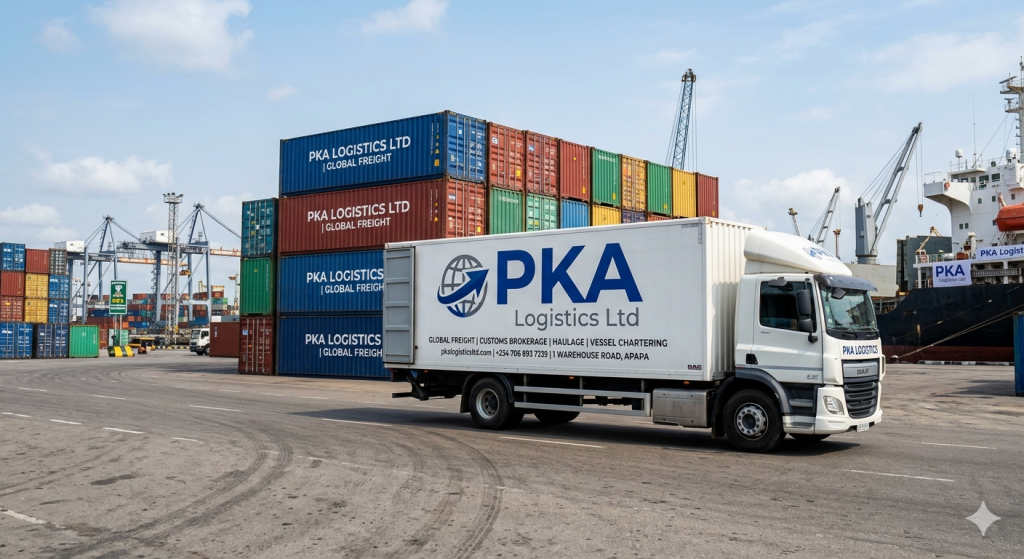

Why Your Shipping Strategy Needs an Urgent Audit in 2026
For the Nigerian professional in Houston, Toronto, or Atlanta, shipping a car back home is often more than a transaction—it’s a milestone. Whether it’s a gift for parents or a fleet for a new business venture, the stakes are high. However, as we move through 2026, the “Wild West” days of Nigerian car imports are over.
The Nigeria Customs Service (NCS) has moved from manual inspections to a high-tech, automated environment. If you are still listening to “freelance agents” who claim they can “talk to someone” to bypass the Age Limit Rule, you are risking more than just a delay; you are risking the total forfeiture of your vehicle and your hard-earned capital. In 2026, compliance isn’t just a suggestion—it is your only protection against absolute loss.
At PKA Logistics Ltd, we’ve spent two decades at the heart of Apapa and Tin Can Island, and we’ve seen thousands of vehicles seized simply because the exporter didn’t understand the “cut-off” math. This guide is designed to ensure you aren’t one of them.
1. Understanding the 15-Year Rule (And the 2026 Reality)
While the historical baseline for car imports was often cited as 15 years, the Federal Ministry of Finance and the NCS have tightened the screws to align with Nigeria’s Green Energy transition and local manufacturing incentives.
The Current 2026 Math
In 2026, the “15-year rule” actually means that any vehicle manufactured before 2011 is in the “danger zone.”
- Preferred Window: 2016–2026 (Lower risk, easier valuation).
- Restricted Window: 2011–2015 (High scrutiny, mandatory physical examination).
- Prohibited Window: 2010 and older (Subject to immediate seizure at Lekki Deep Sea Port or any other gateway).
Why is this strictly enforced now? The government utilizes the VIN Valuation System. The moment your car’s Vehicle Identification Number is entered into the Customs portal, the year of manufacture is automatically flagged. If the year is outside the permissible range, the system will not generate a Pre-Arrival Assessment Report (PAAR), effectively locking your car in the port until it is auctioned or crushed.
2. The Technical Breakdown: How to Ship without Tears
Shipping from North America to Nigeria requires a synchronized dance between three continents. Here is the professional workflow we use at PKA Logistics.
Step A: The Pre-Export “Sanity Check”
Before you pay a dime to a dealership in the USA or Canada:
- VIN Verification: Send the VIN to us. We run it through the NCS database to confirm the exact year Customs will recognize.
- Landed Cost Estimate: We calculate the Nigeria customs duty for Mercedes Benz, Toyota, or Ford based on current 2026 exchange rates and the NAC (National Automotive Council) levy.
Step B: Choosing Your Method (Houston/Baltimore/Montreal)
- RoRo (Roll-on/Roll-off): Often the cheapest way to ship a car from Houston to Nigeria. Best for single units.
- Containerized Shipping: We recommend clearing a 40ft container in Lagos if you are shipping multiple high-value vehicles. This protects against the “Diaspora Pain Point” of vandalism and theft of interior components (GPS brains, catalysts, and side mirrors) during transit.
Step C: The Paperwork (The Non-Negotiables)
To avoid your car being labeled as “smuggled,” you must have:
- Original Title: No “Salvage” titles without proper disclosure (salvage cars face higher scrutiny in 2026).
- Bill of Lading (BoL): Issued by the shipping line.
- Combined Certificate of Value and Origin (CCVO).
3. 2026 Customs Duty & Tax Table
Note: These figures are subject to the Central Bank of Nigeria (CBN) official exchange rate on the day of assessment.
Critical Note: The National Automotive Council (NAC) Levy is a significant cost factor that freelance agents often “forget” to mention until your car is already at the port.
4. Addressing the “Diaspora Pain Points”
The Fear of Vandalism
We hear it every day: “I shipped a car and the navigation system was ripped out.” By using our containerized services, your car is sealed at the point of origin in Canada or the US. The seal is only broken in the presence of Customs at our terminal.
Hidden Port Charges & Demurrage
“Demurrage” is the silent killer of shipping budgets. If your agent is slow, the NPA (Nigerian Ports Authority) and shipping lines charge daily for space.
- The PKA Advantage: Because we are located at 1 Warehouse Road, Apapa, we have boots on the ground. We don’t wait for “calls”—we are at the terminal daily to push your file through.
The “Freelance Agent” Trap
Many Nigerians in the UK or USA use “family friends” or unlicenced agents. While they may seem cheaper, they lack the corporate indemnity and direct access to the Central Bank of Nigeria (CBN) trade portals. If they make a mistake, they disappear. PKA Logistics is a corporate entity registered with the CAC and licensed by the NCS. We are accountable.
5. Why PKA Logistics is Your Best Move in 2026
Located strategically at the gateway of Nigerian trade in Apapa, we offer more than just forwarding. We offer Peace of Mind.
- Transparent Billing: We provide a comprehensive quote. No “emergency” fees mid-clearing.
- Tech-Forward Tracking: From the moment your car leaves Montreal or Baltimore, you have visibility.
- Licensed Professionals: We handle everything from Form M processing for UK exporters to complex duty assessments for US-based fleet owners.
FAQ: Your Questions Answered
Q: Can I ship a 2010 Toyota Camry in 2026? A: No. Under the current enforcement, a 2010 model is over the age limit. It will likely be seized by Customs.
Q: Does the age limit apply to trucks and heavy machinery? A: No. Heavy-duty trucks and specialized machinery (cranes, tractors) currently enjoy an exemption from the 15-year passenger vehicle rule, though they must still meet safety and environmental standards set by NIMASA and the NCS.
Q: What is the “VIN Valuation”? A: It is an automated system that assigns a value to your car based on its VIN. It prevents agents from under-declaring the value of your car to pay lower duties—a practice that used to lead to cars being impounded on the highway later.
Q: How long does clearing take in 2026? A: At the Lekki Deep Sea Port, clearing can be as fast as 3-5 working days. At Apapa or Tin Can, we aim for 7-10 working days, provided all documentation is perfect.
Ready to Ship? Don’t Guess. Get the Facts.
Your vehicle is a significant investment. Don’t let it become a statistic at the Customs warehouse. Contact PKA Logistics today for a Landed Cost Estimate and a professional audit of your shipping documents.
PKA Logistics Ltd Your Licensed Gateway to Nigeria 📍 1 Warehouse Road, Apapa, Lagos.
📞 Tel/WhatsApp: +234 706 893 7339
📧 Email: info@pkalogisticsltd.com
[CONTACT AN EXPERT FOR A QUOTE]